
When travelers start mapping out their dream itinerary through the Peruvian Andes, their plans almost always center on historical classics: wandering Cusco’s cobbled alleyways, exploring Incan ruins, or catching an early morning train to Machu Picchu. But modern travel has evolved. Today’s top adventurers want to engage with the landscape directly—not just observe it from behind a tour bus window.
If you want to experience the sheer scale of the Andes with a rush of pure adrenaline, taking on a Via Ferrata in Cusco is widely considered the ultimate mountain activity.
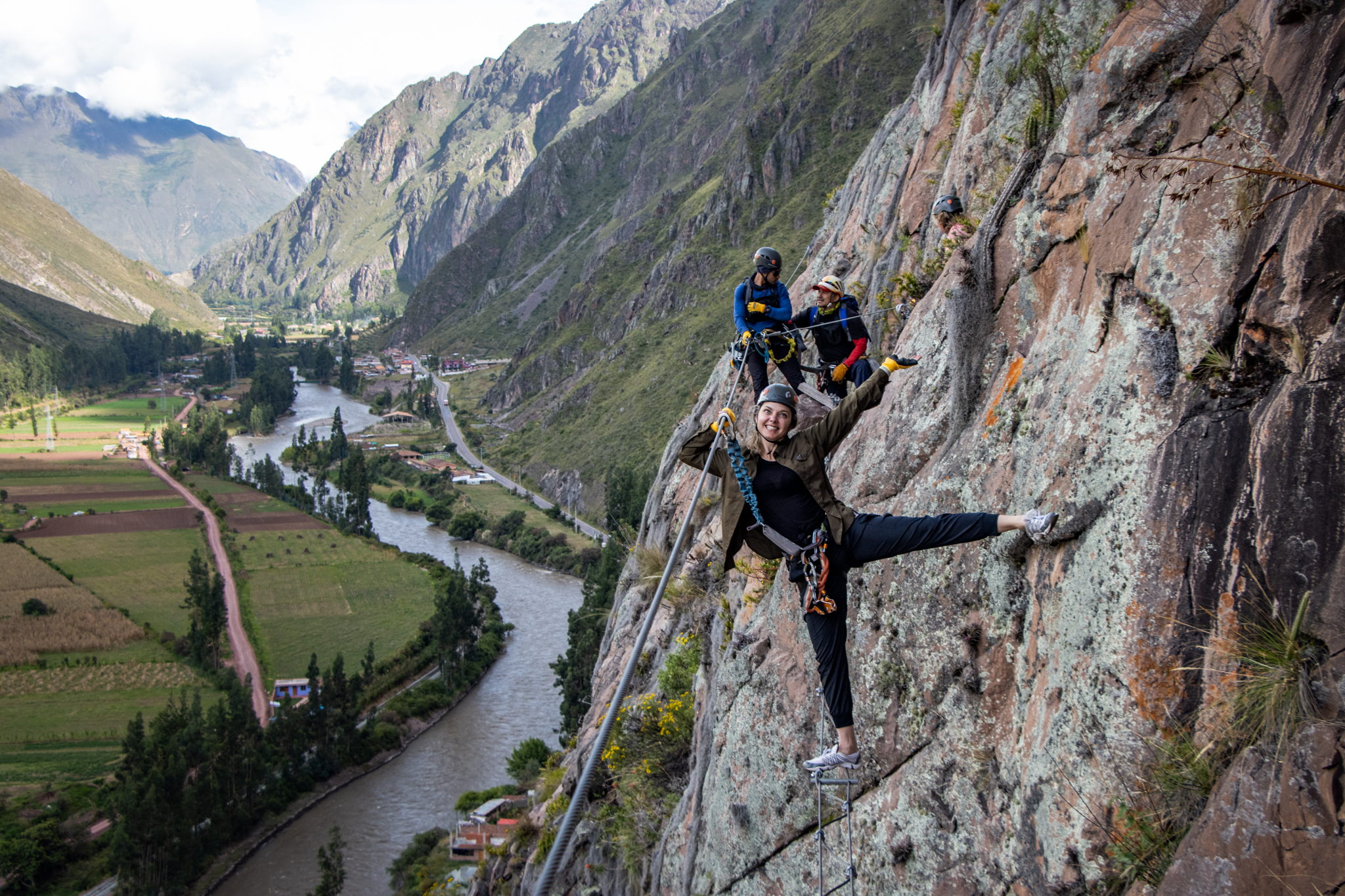
Perched on the granite mountain walls of Pachar in the Sacred Valley, Natura Vive’s Via Ferrata offers everyday travelers a rare opportunity to scale a sheer 400-meter (1,200-foot) cliff face safely, without needing years of expert mountaineering experience.
Here is everything you need to know about climbing the Andes on an iron path, from safety systems and physical difficulty to what you will see at the summit.
What is Via Ferrata?
Originating in the European Alps during the First World War to help soldiers cross steep mountain passes, a Via Ferrata (Italian for «Iron Path») is a protected climbing route built directly into a rock face.
Unlike traditional free climbing—which requires specialized technical skills, complex knot-tying, and high physical risk—a Via Ferrata utilizes permanent infrastructure engineered into the mountain:
- Metal Rungs and Ladders: Anchored deeply into the granite wall to act as secure handholds and footholds.
- Continuous Steel Safety Cable: Runs along the entire length of the route, allowing climbers to stay continuously secured from base to summit.
This clever design turns an intimidating, vertical cliff face into a safe, accessible vertical staircase, allowing non-climbers to experience the thrill of high-altitude exposure with complete peace of mind.
Is Via Ferrata Safe?
Yes, Via Ferrata is extraordinarily safe when operated by certified high-mountain professionals using proper equipment. At Natura Vive, safety is not just a feature; it is the absolute core foundation of everything we build.
Our system operates under a double-carabiner lanyard system (often referred to as a continuous belay logic). As you ascend the mountain, you are attached to the heavy-duty steel cable at all times via two independent safety carabiners. When passing an anchor point, you move one carabiner at a time to the next cable segment, meaning you are never unclipped from the mountain.
Furthermore, all gear—including climbing harnesses, helmets, lanyard shock absorbers, and steel cables—meets strict international mountaineering standards (CE/UIAA certified) and undergoes rigorous daily inspections.
Do You Need Climbing Experience?
No prior rock climbing experience is required.
Because the engineered metal rungs support your weight and provide clear, intuitive foot placements, you do not need to know technical rock climbing moves, complex rope work, or technical foot placement.
If you can climb a tall household ladder, you possess the basic physical mechanics required to complete a Via Ferrata. Before stepping onto the rock face, Natura Vive’s bilingual guides provide a thorough safety briefing and a practice session on a low-level cable to ensure you feel 100% comfortable with your equipment.
How Difficult Is It?
While technical climbing skill is unnecessary, climbing a Via Ferrata is a rewarding physical workout.
- Physical Effort: The climb requires moderate fitness, as you will be pulling your own body weight up metal rungs and rock steps for roughly 1.5 to 2 hours.
- Mental Challenge: The primary challenge for most participants is mental rather than physical. Overcoming high-altitude vertical exposure—looking down between your feet and seeing hundreds of meters of open air—delivers an exhilarating mental thrill.
- Altitude Factor: Keep in mind that you are climbing at an elevation of roughly 2,800 meters (9,180 feet) above sea level. While this is lower and easier on the lungs than Cusco city (3,400 meters), taking slow, steady, rhythmic steps is the key to maintaining energy.
       [ Summit / Platform ] --> 400 Meters Above Valley Floor
                 |
  [ Iron Rungs & Steel Cable ] --> Continuous Double-Carabiner Safety
                 |
     [ Basecamp / Briefing ] --> Full Gear Fitting & Safety Demo
What Should You Wear?
Proper clothing makes a massive difference in your comfort while moving up the granite cliff. Keep these packing guidelines in mind:
- Sturdy Footwear: Rigid-soled hiking boots or high-traction trail running shoes are mandatory. Avoid smooth-soled street sneakers, slip-ons, or sandals, as they lack the grip needed for granite and metal rungs.
- Flexible Activewear: Wear durable, stretch-fabric hiking pants or athletic leggings. Jeans are strongly discouraged because they restrict leg movement and hold moisture.
- Layered Tops: The Andean climate shifts quickly. Wear a breathable, moisture-wicking base layer topped with a light fleece or windbreaker.
- Climbing Gloves: Leather-palmed active gloves protect your hands while gripping the iron rungs and steel cables throughout the ascent.
How Long Does It Take?
A standard Via Ferrata excursion at Natura Vive generally takes 3 to 4 hours in total, broken down as follows:
- Equipment & Briefing (approx. 30 minutes): Harness fitting, helmet adjustment, and safety instructions at basecamp.
- The Ascent (approx. 1.5 to 2 hours): Climbing the 400-meter vertical route, taking strategic rest breaks on engineered cliff platforms to hydrate and take photos.
- The Summit & Descent (approx. 1 hour): Resting at the top platform to enjoy the view, followed by descending via a mountain hiking trail or soaring down our famous 7-cable Zipline Circuit.
What Will You See?
Climbing a Via Ferrata offers a rare condor’s-eye perspective of the Sacred Valley that standard ground tours can never match:
- Panoramic Valley Views: As you gain altitude, the green agricultural tapestry of the valley floor expands beneath you.
- The Roaring Urubamba River: You will look straight down at the winding, silver ribbon of the Urubamba River carving through the canyon.
- Sacred Peaks (Apus): At the summit, you are surrounded by 360-degree views of towering granite walls and snow-capped Andean peaks that have stood watch since Incan times.
- Vertical Architecture: Depending on your route, you will catch close-up views of Skylodge Adventure Suites—the world-famous transparent glass pods suspended directly on the cliff face.
How to Book Your Via Ferrata Excursion
Because Natura Vive strictly limits group sizes to guarantee personalized attention, complete safety, and an exclusive mountain environment, booking in advance is essential:
- Plan Ahead: Reserve your preferred date at least 2 to 4 months in advance, especially during the peak dry season (May through October).
- Choose Your Package: You can book the Via Ferrata as a standalone day activity, combine it with our high-speed Zipline Circuit, or use it as your exclusive check-in climb to spend the night in the Skylodge Adventure Suites.
- Book Directly: Visit the official Natura Vive Web to check live availability and secure your spot with our certified mountain team.
Step Off the Trail and Onto the Rock
Scaling the granite walls of the Sacred Valley on a Via Ferrata is more than just an outdoor activity; it is a transformative personal achievement. It challenges your limits, clears your mind, and connects you to the majesty of the Andes in a way no camera lens ever could.
Don’t just look up at the mountains from a bus window. Put on a harness, clip onto the iron path, and conquer the cliff face yourself.
Are you ready to climb the Andes? Check live availability, explore activity combinations, and reserve your Via Ferrata adventure today on the official Natura Vive Web. The mountain is waiting.